Article on Call to Family, Community, and Participation
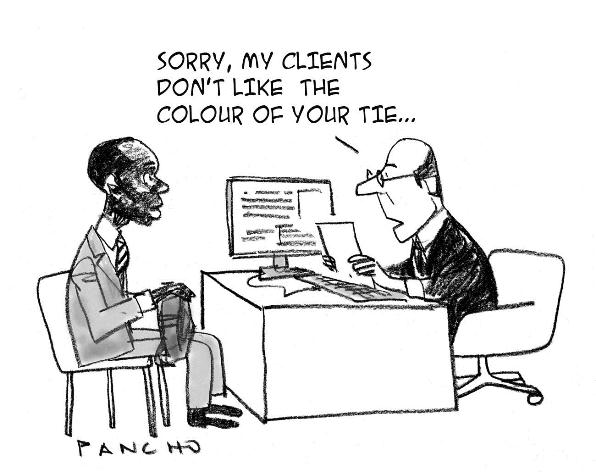
Bigotry and intolerance
What are discrimination and intolerance?
Discrimination – in all its possible forms and expressions – is one of the most common forms of human rights violations and corruption. It affects millions of people everyday and it is one of the virtually difficult to recognise. Discrimination and intolerance are closely related concepts. Intolerance is a lack of respect for practices or beliefs other than ane's own. Information technology too involves the rejection of people whom we perceive as different, for case members of a social or ethnic group other than ours, or people who are different in political or sexual orientation. Intolerance can manifest itself in a wide range of deportment from avoidance through hate speech to concrete injury or even murder.
Discrimination occurs when people are treated less favourably than other people are in a comparable situation only considering they belong, or are perceived to belong to a sure group or category of people. People may be discriminated against because of their age, disability, ethnicity, origin, political conventionalities, race, religion, sex activity or gender, sexual orientation, language, civilization and on many other grounds. Discrimination, which is oft the effect of prejudices people agree, makes people powerless, impedes them from becoming active citizens, restricts them from developing their skills and, in many situations, from accessing piece of work, health services, instruction or adaptation.
Bigotry has direct consequences on those people and groups being discriminated against, simply it has also indirect and deep consequences on society equally a whole. A lodge where discrimination is immune or tolerated is a society where people are deprived from freely exercising their full potential for themselves and for society.
This section describes different faces of discrimination, the manner information technology affects human rights, as well every bit the measures and initiatives that are underway or should be introduced to counter intolerance and discrimination and to contribute to a culture of peace and human being rights. Some of the nigh pervasive forms of discrimination, such as discrimination based on disability, gender or religion, are also presented in more item in other sections of this affiliate.
The principles of equality and non-bigotry are laid down in the UDHR: "All man beings are built-in gratis and equal in dignity and rights" (Article 1). This concept of equality in dignity and rights is embedded in contemporary democracy, so states are obliged to protect various minorities and vulnerable groups from unequal handling. Article ii enshrines freedom from bigotry: "Everyone is entitled to all the rights and freedoms set forth in this Declaration, without distinction of whatever kind".
The Council of Europe fellow member states are too committed to not-discrimination in Article 14 of the European Convention on Human Rights. This article only gives protection from discrimination in relation to the enjoyment of the other rights prepare along in the convention. Protocol 12 to the ECHR was drawn up to provide a stronger, free-standing right to equality and a general prohibition of discrimination: "The enjoyment of any right prepare along by police force shall be secured without discrimination on any footing…"i Thus, this protocol broadens the scope of the ECHR every bit it covers bigotry in any legal right, even when that right is not specifically covered by the convention.
Question: Has your land ratified Protocol 12 to the ECHR?
Straight and indirect discrimination
Discrimination may be practised in a straight or indirect manner. Direct discrimination is characterised past the intent to discriminate confronting a person or a group, for example when an employment role rejects Roma job applicants or a housing visitor does not lend flats to immigrants. Indirect discrimination occurs when an obviously neutral provision, criterion or practice de facto puts representatives of a particular group at a disadvantage compared with others. Examples may range from a minimum height criterion for fire-fighters (which may exclude many more female than male applicants) to the department shop which does not rent people who cover their heads. These rules, apparently neutral in their language, may in fact disproportionately disadvantage members of sure social groups. Both direct and indirect discrimination are forbidden under the human rights instruments; Indirect discrimination is oftentimes more pervasive and difficult to bear witness than direct discrimination.
Question: Have you ever felt discriminated against?
Structural discrimination
Structural discrimination is based on the very manner in which our society is organised. The system itself disadvantages sure groups of people. Structural discrimination works through norms, routines, patterns of attitudes and behaviour that create obstacles in achieving real equality or equal opportunities. Structural bigotry often manifests itself as institutional bias, mechanisms that consistently err in favour of ane group and discriminate against another or others. These are cases when the resulting discrimination is clearly not rooted in an individual'due south conviction regarding a person or a group of people, but in institutional structures, exist they legal, organisational, and so on. The challenge of structural discrimination is to brand information technology visible, as nosotros often grow up with it being cocky-evident and unquestioned.
The being of structural discrimination leaves states with the challenge of adopting policies that look non only at the legal framework but at other incentives as well, taking into account patterns of behaviour and how different institutions operate. Human being rights education may be one of the responses to this problem.
Affirmative action
In some cases a preferential or positive treatment of people belonging to certain groups may be applied as an attempt to alleviate or redress the harms acquired by structural discriminations. Affirmative activeness, sometimes called "positive discrimination", may not only be immune but even welcomed in order to counter inequality. For example, economic differences between rural and urban areas may lead to a different level of admission to services. This may result in inequality unless special efforts are taken to counterbalance the effects of the original economic imbalance. In such cases the preferential handling is necessary to secure effective equality rather than causing inequality.
The International Convention on the Emptying of All Forms of Racial Discrimination stipulates that affirmative action programmes may be required of countries that have ratified the convention, in society to rectify systematic discrimination. Such measures, all the same, "shall in no case entail as a consequence the maintenance of unequal or divide rights for different racial groups later on the objectives for which they were taken have been achieved".
Multiple discrimination
Each one of us belongs to or identifies with several social groups. When dealing with whatever particular disadvantaged social group, information technology is important to be enlightened of the internal heterogeneity of the group and the potential for multiple grounds of bigotry. These multiple identifications non merely mean more possibilities of discrimination, but can also come from several directions: for instance, a lesbian Roma adult female might exist subject area to multiple bigotry by heterosexual non-Roma; at the same fourth dimension she can be subject to homophobia within the Roma community and subject field to racism within the LGBT community. In most cases multiple discrimination occurs to so-called visible minorities, women and people with disabilities.
Majorities and minorities
Discrimination is usually exerted past majorities upon minorities, fifty-fifty though discrimination from minorities also exists. Being in the bulk is a static or a dynamic situation, depending on many factors. When we are on the winning side in a autonomous election, we are in the majority as a upshot of our convictions, a decision, or, for case, the result of a vote. If our convictions change, or the party we support loses the side by side ballot, our majority status is no longer valid. In that location are more static positions of majority and minority, when 1 or several aspects of our identity (nationality, faith, sexual orientation, gender, lifestyle, inability) are representative of a group that constitutes less (usually much less) than 50% of the whole of the population of a given geographical unit.
Democracies are vulnerable to the "tyranny of bulk": a situation in which the majority rule is then oppressive that it completely disregards the needs and wants of members of minorities. The human being rights framework non merely protects citizens from the oppression of an individual or a small grouping of individuals, just is too a means of protection for minorities against the bulk.
Question: Tin can you think of someone who may never feel discrimination?
The role of stereotypes and prejudices
A stereotype is a generalised belief or opinion about a detail group of people, for example, that entrepreneurs are ambitious, public servants are humourless, or that women have long hair and article of clothing skirts. The main office of stereotypes is to simplify reality. Stereotypes are usually based either on some kind of personal experience or on impressions that we have caused during early childhood socialisation from adults surrounding us at dwelling, in school or through mass media, which then get generalised to have in all the people who could possibly exist linked.3
A prejudice is a judgment, usually negative, we make nigh some other person or other people without actually knowing them. Just like stereotypes, prejudices are learned as function of our socialisation process. One deviation between a stereotype and a prejudice is that when enough data is available well-nigh an individual or a particular situation, we practice away with our stereotypes. Prejudice rather works like a screen through which nosotros perceive whatever given piece of reality: thus, information alone commonly is not plenty to get rid of a prejudice, equally prejudices alter our perceptions of reality; we will process information that confirms our prejudice and fail to observe or "forget" annihilation that is in opposition. Prejudices are, therefore, very hard to overcome; if contradicted by facts, nosotros'd rather deny the facts than question the prejudice ("simply he's not a real Christian"; "she is an exception").
Bigotry and intolerance are often based on or justified past prejudice and stereotyping of people and social groups, consciously or unconsciously; they are an expression of prejudice in practice. Structural bigotry is the result of perpetuated forms of prejudice.
Forms of intolerance and discrimination
Xenophobia
The Oxford English language Dictionary defines xenophobia as "a morbid fear of foreigners or foreign countries". In other words, it ways an irrational aversion to strangers or foreigners; it is irrational because information technology is not necessarily based on any directly concrete experiences of threat posed by foreigners. Xenophobia is a prejudice related to the simulated notion that people from other countries, groups, cultures, or speaking other languages are a threat.
Xenophobia is closely related to racism: the more than "different" the other is perceived, the stronger the fears and negative feelings tend to be. Xenophobia is one of the about mutual forms of and grounds for discrimination and it is for this that it is a challenge to human rights.
Question: Who are the targets of xenophobia in your lodge?
Racism
Some prejudices may transform into ideologies and feed hatred. I such credo is racism. Racism involves discriminatory or abusive behaviour towards people because of their imagined "inferiority". There has been wide-spread belief that in that location are homo races within the human species, distinguishable on the basis of concrete differences. Scientific research shows, notwithstanding, that "human populations are not unambiguous, clearly demarcated, biologically singled-out groups"iv, and that race is an imagined entity or social construct. All humans vest to the same species and, therefore, information technology makes no sense to talk of "races".
The impact of racist ideologies has been devastating to humanity; it has justified slavery, colonialism, apartheid, forced sterilisations and annihilations of peoples. It has been the ground of the Nazi ideologies and of the programmes to exterminate Jews and other "inferior peoples".
Unfortunately, racism continues to be nowadays in contemporary European societies and politics. Although race is no longer accustomed as a biological category and only few people believe now in "superior races" with an inherent right to practice power over those considered "inferior", the impact of racism lingers on and takes on different forms, such as cultural racism or ethnocentrism, the conventionalities that some cultures, usually their ain, are superior or that other cultures, traditions, customs and histories are incompatible with theirs.
International Day for the Elimination of Racial Discrimination
21 March commemorates the Sharpeville massacre in 1960, when the police force opened burn down and killed 69 people at a peaceful demonstration confronting the apartheid laws in Sharpeville, South Africa.
UNITED for Intercultural Activity, a European network against nationalism, racism, fascism and in support of migrants and refugees, co-ordinates a European-wide action week effectually this date to promote tolerance and equal rights, and to gloat diversity in Europe.7
The widespread practices of deportation and unequal treatment of migrants, also equally the structural bigotry against certain ethnic minorities such as Roma past many governments, nourishes xenophobia and latent racist feelings. Hate-motivated crimes that are supported by racist ideology are regularly in the news in many of the Council of Europe member states.
Question: Can yous point out whatever recent cases of racist violence in your country?
Antisemitism
Antisemitism can exist defined as "hostility towards Jews every bit a religious or minority group often accompanied past social, economic, and political discrimination"9. Antisemitism has been widespread in European history up to the present. Past the terminate of the 19th century, Jewish communities in Russia had regularly became victims of pogroms, which were organised systematic discriminatory acts of violence against Jewish communities past the local population, often with the passive consent or active participation of police force enforcement, encouraged by the antisemitic policies of governments. Attacks on Jewish communities were also common in other European countries, including among others France and Austria.
The rise of Fascism in the first function of the 20th century brought further hardship for many Jews in Europe, as antisemitism became role of the racist ideologies in power. This is true for Fascist regimes and parties that collaborated directly or indirectly with the German Nazi regime during the Holocaust, but it had also an influence in other societies and systems that were influenced past racist ideologies.
During the Holocaust, perpetrated by Nazi Germany and its allies in the 2nd World War, known also as the Shoah (a Hebrew word meaning desolation), an estimated 6 million Jews were systematically exterminated for no other reason than that they were Jews.
With the success of the Bolshevik Revolution, pogroms ceased in the Soviet Union but antisemitism continued in different forms, including forced displacements, confiscation of property and bear witness trials. Nether communist regimes, antisemitism was often also disguised under official "anti-Zionist" policies.
Today, antisemitism remains widespread in Europe, fifty-fifty if in some cases it is harder for the public to identify or to admit. In recent years, Jewish cemeteries have been desecrated, Jews are regular targets of detest speech and they are sometimes physically attacked. Research regularly indicates ongoing high levels of antisemitism amid mainstream European societies, accompanied past sporadic rises.
As the European Commission Against Racism and Intolerance (ECRI) pointed out, it is an alarming trend in Europe, that despite all efforts antisemitism "continues to be promoted, openly or in a coded manner, by sure political parties and leaders, including non merely extremist parties, but as well sure mainstream parties"x, and in many cases there is tolerance or even acceptance of these agendas past sure segments of the population.
Question: What happened to Jewish people in your country during the 2nd World War?
Young people working against antisemitism
Movement against Intolerance (Spain)
High School students repainted parts of Picasso's "Guernica" and reassembled them on a large wall in a public activity to show that the fatal realities of the past are present here and at present. During this process the symbols used in the painting and its relation to the Holocaust and the "Kristallnacht Pogrom" were explained to the audition.
Holocaust Center and Foundation (Russia): International contests "Holocaust lessons – a mode to Tolerance"
Since 2002 this centre has run memorial programmes and international educational activities about tolerance and the Holocaust, including an annual competition for students and teachers from Russia, other European and CIS countries, Israel and the U.s.a..
The Resolution 1563 (2007) of the Parliamentary Associates of the Council of Europe urges the member states to criminalise and/or implement such legislation which condemns antisemitism, including, but not limited to Holocaust denial, whether information technology is committed by individuals, groups or even political parties.11
The Fundamental Rights Agency (FRA) of the European Union publishes overviews of the state of affairs of antisemitism in its fellow member states. In their 2010 update on antisemitism in the EU, the Agency noted that "virtually Member States do not take official or fifty-fifty unofficial data and statistics on antisemitic incidents". The Agency has recognised the importance of Holocaust education as a means of addressing antisemitism, and over the years has initiated and participated in several joint projects in this area.12
Discrimination against Roma people:
Romaphobia and Antigypsyism
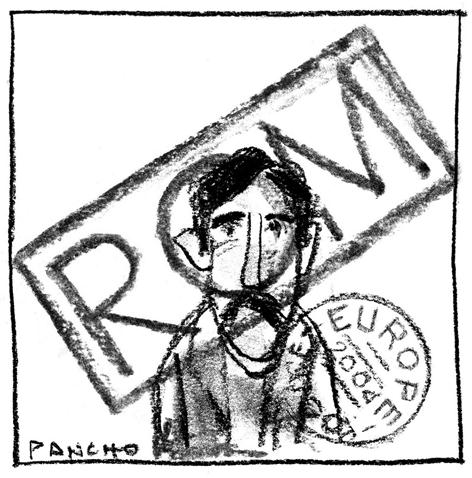 The name Roma or Romani is a commonage title for a very diverse ethnic group of people who cocky-identify as members of various sub-groups based for example on current or by geographical location, dialect, and occupation. In that location are approximately 10 million Roma in Europe. A few groups live equally travellers with no permanent home, only the majority is now living under sedentary conditions: there are urbanised Roma groups every bit well as many living in more or less segregated neighbourhoods or sections of smaller towns or villages. Roma are present in virtually all European countries.
Discrimination against Roma is deep rooted and a common reality all over Europe. As the Council of Europe Commissioner for Human Rights pointed out, at that place are alarming trends throughout Europe, strongly resembling Nazi ideology and reasoning in relation to Roma, such as fears for rubber and public wellness. Rhetoric criminalising the whole Roma population is besides very common throughout the fellow member states.14
As Roma are more than likely to be discriminated confronting, the Roma population is disproportionately vulnerable to armed conflicts, natural catastrophes or economic crises. In many countries, Roma have been victims of violent racist groups (in Bulgaria, Hungary, Italy, Romania, and so on), resulting in murders. Roma were defenseless in the crossfire of the armed conflicts in former Yugoslavia; Roma neighbourhoods and villages are often segregated and isolated.15 Many young Roma grow up in hostile social environments where the merely support and recognition they have is in their own community or family. They are denied many basic rights such as teaching or health, or have express admission to them.
Question: What is the estimated proportion of Roma in the population of your state?
Deportations of Romanian and Bulgarian Roma in 2010
In 2010, the French government appear a crackdown on illegal camps of Roma who had recently migrated to France, and sent several chiliad of their inhabitants dorsum to Romania and Bulgaria, claiming that Roma settlements are major sources of criminal offense and a public nuisance.
The UN Commission on the Elimination of Racial Bigotry sharply criticised France's crackdown and said that racism and xenophobia were undergoing a "meaning resurgence". At the same fourth dimension, stance polls suggested that as many as 65% of French people backed the government's tough line.16 The European Committee of Social Rights concluded unanimously that the forced evictions of Roma constituted a violation of rights provided for in the revised European Social Lease, including the freedom from bigotry and the correct to housing.17
Porrajmos refers to the genocide of European Roma perpetrated past the Nazis and their allies betwixt 1933 and 1945. The estimated number of victims varies, according to different sources, from betwixt half a million to two million, leading to the loss of up to 70% of the pre-war Roma population.
Question: What are the typical means of presenting Roma in the news in your country?
A greater sensation and business organisation about the Roma is slowly emerging. The Decade of Roma Inclusion 2005–2015 stands as an unprecedented political commitment by European governments to ameliorate the socio-economic condition and social inclusion of Roma.19 Actions and programmes by young people have also contributed to counteracting intolerance and prejudices towards Roma by deconstructing the stereotypes many of us have grown up with. The international campaign Typical Roma?, for instance, addressed stigmatisation and stereotypes as root causes of the social exclusion of Roma.xx
The Council of Europe began working confronting the discrimination of Roma in 1969 by adopting the first official text on the "situation of Gypsies and other Travellers in Europe". In 2006, the Quango of Europe launched the Roma campaign Dosta!, an awareness-raising effort that aims at bringing non-Roma closer to Roma people.
In 2010 the Strasbourg Declaration on Roma was adopted at a Loftier Level Meeting; in the proclamation the member states agreed on prioritising action for non-discrimination and social inclusion of Roma, including the active participation of Roma.
In 2012 the youth sector of the Council of Europe, together with European Roma networks and organisations, initiated a Roma Youth Action Programme in order to improve the participation of Roma youth in European policies on Roma and youth, and to counter effects of bigotry on young Roma.
ECRI also pays attention to the situation of Roma in Europe; its Full general Recommendation 13 (2011) on Combating Antigypsyism and Bigotry confronting Roma stresses that antigypsyism is an "especially persistent, violent, recurrent and commonplace class of racism" and urges governments to combat antigypsyism in the fields of education, employment, housing and health and combat racist violence and crimes against Roma.
The European union is likewise increasingly acknowledging the need to counteract the effects of bigotry confronting Roma in its member states. In April 2011, the European Commission issued "An EU Framework for National Roma Integration Strategies up to 2020"21, which stated that "In spite of some progress accomplished both in the Member States and at European union level over the past years, little has inverse in the day-to-day state of affairs of almost of the Roma".
Intolerance based on organized religion
Liberty of faith and religious tolerance are basic values nowadays in every European country, yet acts of discrimination based on religion have not withal disappeared. Religious intolerance is often linked with racism and xenophobia – particularly with Antisemitism and Islamophobia. Whereas in the past Europe was characterised by conflicts betwixt, and discrimination of Protestant or Catholic Christians, Roman and Eastern Orthodox or "official" churches and dissenting groups, today the political differences among Christian denominations have go far less important. At the aforementioned time many religious communities in minority positions continue to thrive across Europe, including Baha'is, Buddhists, Christians, Hindus, Jews, Muslims and Rastafarians. This growing religious diversity is often ignored, as well as those millions of Europeans who are not religious.
Religious intolerance and discrimination are oftentimes linked with racism and xenophobia and, therefore, tend to involve multiple discrimination.
Question: What minority religions be in your country?
Discrimination based on gender identity, gender or sexual orientation
Gender-related discrimination includes the discrimination of women as opposed to men (this class is too called sexism or sex bigotry) and that of transgender or transsexual people, whose gender identity is inconsistent or not culturally associated with their assigned sex. Discrimination based on sexual orientation affects homosexual and bisexual people. As equality between women and men is discussed in detail in the section on Gender, here we but address the other forms of gender- or sex-related discrimination.
Homophobia is ofttimes defined every bit "an irrational fear of and aversion to homosexuality and of lesbian, gay, bisexual and transgender (LGBT22) people, based on prejudice, similar to racism, xenophobia, antisemitism and sexism"23, as well as people who are perceived as being LGBT. If directed against transgender people, it is called "transphobia". Various totalitarian regimes of the 20th century fabricated homophobia a part of their political ideology, such as Nazism in Federal republic of germany, Stalinism in the Soviet Union or Fascism in Kingdom of spain. Democratic regimes in Europe have, nonetheless, justified homophobic legislation, including pathologisation and criminalisation of homosexuality, and, with information technology, structural discrimination of LGBT people for a long time. Today, discrimination against LGBT people withal occurs in all societies in Europe in spite of the fact that many states have adopted anti-discrimination legislation. Many LGBT people cannot fully enjoy their universal human rights, run the adventure of becoming victims of hate crime and may not receive protection when attacked in the street past beau citizens.
In many parts of the world, LGBT people are subjected to different forms of violence that range from exact attacks to being murdered. In many countries in the globe, the do of homosexuality is still a criminal offence and in some of them it is punishable by a prison house sentence or the death penalisation24.
LGBT people are oftentimes denied their human rights, for example the right to work, every bit they get fired or are discriminated confronting by employers because of their sexual orientation or gender identity. The right to safety and security of a person is another which is very frequently violated when (young) people are bullied at school or harassed in the work place. Lesbian and gay couples in many countries of Europe feel discriminated in such areas equally the correct to marry, to institute a family or to adopt children.
Question: In what areas of life are LGBT persons discriminated against in your country?
Quango of Europe's work
The European Courtroom of Human Rights has oftentimes had a pioneering office in sanctioning homophobia. In a serial of cases the court found that bigotry in the criminal law regarding consenting relations betwixt adults in private was contrary to the right to respect for private life in Article eight of the ECHR (Dudgeon v. UK, 1981, Norris v. Ireland, 1988, Modinos 5. Cyprus, 1993). The Court was in fact the first international body to find that sexual orientation criminal laws violate human rights and has had the longest and largest jurisprudence in addressing sexual orientation issues. There take as well been several cases related to unmarried-parent adoption.
In 2011, the Council of Europe Commissioner for Human Rights published his study on bigotry on grounds of sexual orientation and gender identity. The report welcomed the advances made in the field of LGBT rights in about fellow member states, stating that "the pathologisation and criminalisation of homosexuality in Europe clearly belong to the past". At the same fourth dimension the report noted that serious concerns remain in many areas of human being rights of LGBT persons, and this is especially true of the rights of transgender persons.26
The Council of Europe set upward a unit on LGBT Issues in order to to streamline piece of work on LGBT matters. This was announced equally the kickoff-ever structure of its kind in an international intergovernmental institution and signals the importance of LGBT issues within the framework of human rights in Europe.
Education, both formal and non-formal, play a central role in reducing and eradicating prejudice against LGBT people. It is simply through education that prejudices can be addressed and challenged. The programmes of the European Youth Centres and of the European Youth Foundation regularly feature human rights education and training activities for multipliers and activists confronting homophobia. These include study sessions organised in co-operation with youth organisations such as the International Lesbian, Gay, Bisexual, Transgender, Queer Youth and Student Organisation (IGLYO) and the Association of Nordic and Political leader-Balt LGBTQ Student Organizations (ANSO).
Counteracting Bigotry
Education
At that place are several approaches to anti-discrimination and anti-racist activities including:
- legal action to enforce the right to not-discrimination
- educational programmes that raise awareness near the mechanisms of prejudice and intolerance and how they contribute to discriminate and oppress people, and on the appreciation of diversity and promoting tolerance
- activism by civil society to denounce bigotry and prejudice, to counteract hate crimes and hate speech, to back up victims of discrimination or to promote changes in legislation.
Educators recognise the demand to develop in every person a tolerant, non-discriminatory attitude and create a learning environment that acknowledges and benefits from diversity instead of ignoring or excluding it. Every bit part of this development, those who work with children or youth, likewise as children and immature people themselves, should go aware of their own and others' discriminatory behaviours. For instance, man rights educational activities can help participants to develop sensation and empathy on the one mitt, and resilience and assertiveness on the other hand so that people can avoid, preclude or stand upwardly against discrimination.
Intercultural learning is the process of learning about variety and has been a cardinal approach in European youth work. In the youth field of the Council of Europe, intercultural learning is presented equally "a process of social education aimed at promoting a positive relationship between people and groups from different cultural backgrounds"27 and promotes mutual respect and solidarity.
International human rights framework
Un
I of the primary tools of fighting bigotry within the Un system is the International Convention on the Emptying of All Forms of Racial Bigotry, which commits the signatory states to the emptying of racial discrimination. The Convention includes an individual complaints' mechanism and is monitored by the Commission on the Elimination of Racial Bigotry (CERD), a body of independent experts. All states parties are obliged to submit regular reports to the Committee, which in plough addresses its concerns and recommendations to the land political party in the grade of "last observations". The Committee has iii other mechanisms for its monitoring functions: the early-warning procedure, the exam of inter-state complaints and the examination of private complaints.
Other conventions of the UN address discrimination against specific groups, such as the Convention on the Elimination of Discrimination Against Women or the Convention on the Rights of Persons with Disabilities.
The Arrangement for Security and Co-performance in Europe (OSCE)
OSCE is a regional security system with 56 member states from three continents (including all the Council of Europe member states). The OSCE likewise participates in combating all forms of racism, xenophobia and discrimination, including antisemitism, and discrimination against Christians and Muslims. One of its institutions is the Warsaw-based Office for Autonomous Institutions and Man Rights (ODIHR) which:
- Collects and distributes data and statistics on hate crimes
- Promotes best practices in the fight confronting intolerance and discrimination
- Provides help to participating states in drafting and reviewing legislation on crimes fuelled by intolerance and discrimination.
The OSCE has a High Commissioner on National Minorities whose mandate includes identifying and seeking the early resolution of tensions involving national minority bug.
The European Spousal relationship anti-discrimination policies
Co-ordinate to Article 21.ane of the Charter of Central Rights of the European Union, "whatsoever bigotry based on whatever ground such as sex, race, colour, ethnic or social origin, genetic features, language, faith or belief, political or any other opinion, membership of a national minority, property, birth, disability, historic period or sexual orientation, shall be prohibited".
The European union has several anti-bigotry Directives. The Racial Equality Directive ensures equal treatment between people, irrespective of racial or ethnic origin. The Employment Equality Framework Directive prohibits bigotry in the workplace on grounds of disability, sexual orientation, religion or conventionalities, and age. The equality of men and women are provided for in two Directives, one in matters of employment and occupation the other in the access to and supply of goods and services29.
The European union legislation as well requires that each member country has a designated national equality body which can be contacted for advice and support.
Questions around the denial of aviary to refugees, deaths of many migrants on the European union borders, Islamophobia, and the deportation of Roma keep to split up the European Union members and tarnish its record of anti-discrimination efforts. A threat to human rights also comes from political parties which in power pass de facto discriminative legislation. These problems can be remedied only past a comprehensive policy, including youth policy in the sphere of non-discrimination, combating racism and intolerance.
The Council of Europe
Combating racism and intolerance was at the centre of the creation of the Council of Europe in 1949, and remains one of its priorities today. In addition to the European Convention of Homo Rights and other conventions, the Council has ready specific instruments addressing racism, discrimination and intolerance. In 1993, the ECRI was created equally an independent homo rights body to monitor the situation with regard to racism, racial discrimination, xenophobia, antisemitism and intolerance in each member land, and to make specific recommendations to their governments and general recommendations addressed to all fellow member states.
While the ECRI is the Council of Europe's principal torso in combating racism and intolerance, other bodies and departments of the Organisation such as the Commission of Ministers, the Parliamentary Assembly, the Commissioner for Human Rights, the Advisory Committee on the Framework Convention for the Protection of National Minorities and the European Court on Man Rights also contribute to this objective.
The Framework Convention on the Protection of National Minorities recognises that "[the]protection of national minorities and of the rights and freedoms of persons belonging to those minorities forms an integral role of the international protection of man rights" (Commodity i). State parties to the convention are committed to guarantee to national minorities the correct of equality before the constabulary as well as in all areas of economical, social, political and cultural life; ensuring their right to freedom of peaceful associates, association, expression, idea, censor and religion; and enabling national minority members to maintain, develop and preserve their culture. It also prohibits forced assimilation.30
Segregation of Roma children the Czechia condemned by the ECHR31
"The applicants were schoolchildren of Roma origin who were placed in "special schools" intended for pupils with learning disabilities. They submitted that they had been treated differently in the education sphere to children who were not of Roma origin in that, by being placed in special schools without justification, they received a substantially inferior education to that provided in ordinary primary schools, with the outcome that they were denied access to secondary teaching other than in vocational training centres." The Court found a violation of Commodity fourteen (prohibition of bigotry) read in conjunction with Article 2 of Protocol No. i (correct to didactics).32
Question: Which public authorities have the responsibility to gainsay discrimination in your country?
European youth policies have traditionally included a stiff dimension of intercultural learning and combating racism and prejudice. Agenda 2020, the main youth policy document of the Council of Europe, puts a special accent on "preventing and counteracting all forms of racism and discrimination on any ground" and recognises intercultural learning equally a non-formal educational method "especially relevant for promoting intercultural dialogue and combating racism and intolerance"33. I of major actions of youth work and youth policy against discrimination have been the European youth campaigns All Different – All Equal, which mobilised young people against racism, antisemitism, xenophobia and intolerance and for diversity, human rights and participation. Thousands of young people took office in the diverse activities of the campaign throughout Europe.
The White Paper on Intercultural Dialogue "Living Together equally Equals in Dignity" was adopted past the Council of Europe in 2008 and provides guidelines and analytical and methodological tools for the promotion of intercultural dialogue past policymakers and practitioners. It promotes intercultural approaches for managing cultural diversity, based on human dignity and embracing "our common humanity and common destiny".
Despite the wide spectrum of existing instruments and approaches to combat racism, xenophobia and bigotry, hostility against foreigners, violation of the rights of minorities, high levels of aggressive nationalism and banal forms of discrimination are still a daily reality in near societies across Europe. That is why it is and then of import today to exist active and creative in promoting variety, equality, not-discrimination and human rights.
Endnotes
1 Protocol No. 12 to the Convention for the Protection of Man Rights and Primal Freedoms
two Mario Peucker, "Racism, xenophobia and structural discrimination in sports", State study, Deutschland, Bamberg, 2009, p26:
world wide web.efms.uni-bamberg.de/pdf/RACISM_in_SPORT_2010.pdf
3 Education Pack "All Different – All Equal" – "Ideas, resources, methods and activities for informal intercultural education with immature people and adults" (revised edition) Council of Europe, 2005
four For example, come across American Anthropological Association Statement on "Race": world wide web.aaanet.org/stmts/racepp.htm
five Racism and the administration of justice, Amnesty International, 2001, AI Alphabetize: 40/020/2001: www.amnestymena.org/Documents/Human action%2040/ACT400202001en.pdf
6 Lydia Gall, Coercive Sterilisation – an Example of Multiple Discrimination, 2010: www.errc.org/cikk.php?page=ten&cikk=3564
7 www.unitedagainstracism.org
viii Alana Lentin, "Committed to Making a Difference. Racism, antisemitism, xenophobia, and intolerance and their impact on immature people in Europe" (symposium written report), 2006
9 Webster'southward Third New International Dictionary
10 ECRI Full general Policy Recommendation No.9: The fight against antisemitism, June 2004, CRI(2004)37
11 http://associates.coe.int/main.asp?Link=/documents/adoptedtext/ta07/eres1563.htm
12 http://fra.europa.eu/fraWebsite/attachments/Antisemitism_Update_2010.pdf
xiii Valeriu Nicolae, ergonetwork: www.ergonetwork.org/antigypsyism.htm
14 "Positions on the human rights of Roma", Position Paper from the Commissioner for Human Rights
https://wcd.coe.int/ViewDoc.jsp?id=1631909
15 Dosta! Entrada background information. www.dosta.org/en/node/55
xvi Q&A: French republic Roma expulsions, BBC article www.bbc.co.uk/news/globe-europe-11027288
17 Resolution CM/ResChS(2011)ix Commonage Complaint No. 63/2010 https://wcd.coe.int
xviii Ingrid Ramberg, "Committed to Making a Difference. Racism, antisemitism, xenophobia, and intolerance and their impact on young people in Europe" (symposium written report), 2006
19 Learn more at www.romadecade.org
xx Larn more than at www.typicalroma.eu
21 http://ec.europa.european union/justice/policies/discrimination/docs/com_2011_173_en.pdf
22 Intersex people (variety of conditions in which a person is born with a reproductive or sexual anatomy that doesn't seem to fit the typical definitions of female or male) and the ones who identify themselves as "queer" may associate themselves with the LGBT customs, which is and so collectively referred every bit LGBTIQ.
23 European Parliament resolution on homophobia in Europe (P6_TA(2006)0018), January eighteen, 2006, world wide web.europarl.europa.eu/sides/getDoc.do?blazon=TA&reference=P6-TA-2006-0018&linguistic communication=EN
24 ILGA "State Sponsored Homophobia", May 2009: www.ilga.org/statehomophobia/ILGA_State_Sponsored_Homophobia_2009.pdf
25 "Social Exclusion of Young Lesbian, Gay, Bisexual and Transgender (LGBT) People in Europe", ILGA-Europe and IGLYO, April 2006, www.iglyo.com/content/files/2006-Report-SocialExclusion.pdf
26 www.coe.int/t/Commissioner/Source/LGBT/LGBTStudy2011_en.pdf
27 Equipe Claves, quoted in "Intercultural Learning in European Youth Work: Which Ways Forward?", by Ingrig Ramberg (ed.), Council of Europe, 2009.
28 United Nations Globe Conference Against Racism, Racial Discrimination, Xenophobia and Related Intolerance: www.un.org./WCAR/durban.pdf
29 Directives (2000/43/EC), (2000/78/EC), (2006/54/EC) and (2004/113/EC) respectively.
thirty Framework Convention for the Protection of National Minorities, http://conventions.coe.int/Treaty/en/Treaties/Html/157.htm
31 Case of D.H. and Others five. the Czech republic (Awarding No. 57325/00), Judgment, Strasbourg, 13 November 2007: www.asil.org/pdfs/ilib071214.pdf
32 60 years of the European Convention on Human being Rights: Roma Rights, 2010, Quango of Europe
33 Final Announcement: The Hereafter of the Quango of Europe youth policy: Calendar 2020, 8th Council of Europe Conference of Ministers responsible for youth, Kyiv, 2008: world wide web.coe.int/t/dg4/youth/ig_coop/8_cemry_declaration_EN.asp
Source: https://www.coe.int/en/web/compass/discrimination-and-intolerance
0 Response to "Article on Call to Family, Community, and Participation"
Post a Comment